How Aisha and Raj Realized Renting in Toronto Was Costing Them $240,000 Over 10 Years

Written by
Divya MoreauMBA, Financial Educator
Divya is an MBA graduate and financial educator based in Calgary with a passion for helping Canadian families build wealth through disciplined saving and smart investing. She specializes in mortgage planning, real estate analysis, retirement projections, and first-home buyer strategies.
AI Generated by TrackMoola
The Rent Trap Nobody Talks About
Aisha and Raj had been renting their two-bedroom condo in North York for four years. At $2,800 a month, their rent had climbed $400 over that time, and their landlord had just hinted at another increase. They were earning well — combined household income around $145,000 — and their friends were all buying. But the Toronto market felt terrifying. Was renting smarter?
"Everyone kept telling us renting was throwing money away," says Aisha. "But buying a $750,000 condo also felt like throwing money at a bank in interest. We genuinely had no idea which was better for us financially."
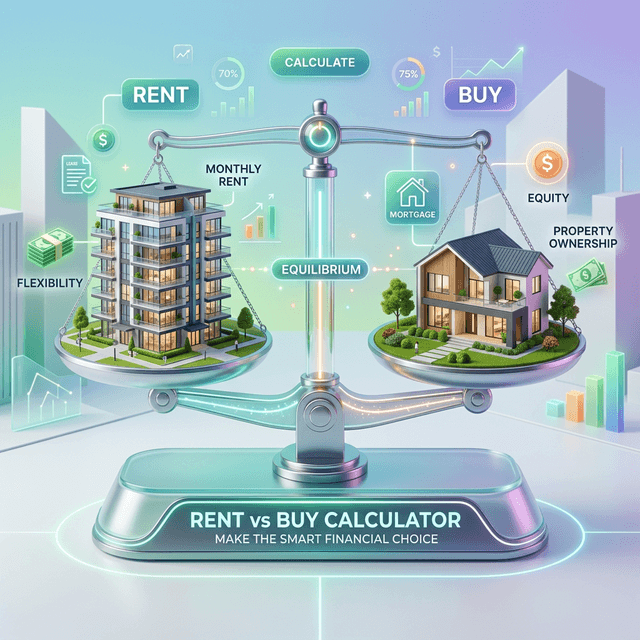
That's when they found TrackMoola's Rent vs Buy Calculator.
Running the Numbers
They entered their situation: $2,800 monthly rent, a target home price of $750,000, 20% down payment ($150,000), a 5.5% mortgage rate, and their province as Ontario. They kept the default assumptions — 3% home appreciation, 2% rent increase per year, and 6% investment return for the "what if we invested the down payment instead" scenario.
The results were striking.
At the 5-year mark, renting was still slightly ahead — their $150,000 down payment invested at 6% had grown, and the cumulative rent they'd paid was less than the cumulative cost of ownership. But at year 7, buying crossed over. And by year 10, buying was ahead by $240,000 in net wealth.
The calculator also flagged their GDS ratio at 28% — well within the 39% limit — meaning the mortgage was affordable on their income.
The Break-Even Warning
The most important insight wasn't the 10-year winner. It was the break-even year.
"The calculator told us buying only wins if we stay for at least 7 years," Raj says. "We had never thought about that. We'd been vaguely planning to move cities in 3-4 years for career reasons. If we'd bought and moved in 3 years, we would have lost money."
That one insight changed their decision timeline entirely. They decided to commit: they would stay in Toronto for at least 7-8 years. With that commitment made, buying made clear financial sense.
What the Calculator Showed (Their Actual Numbers)
- Monthly mortgage payment: $3,487 (vs $2,800 rent)
- Monthly ownership cost (mortgage + tax + insurance + maintenance): $4,612
- GDS ratio: 28% — affordable
- Break-even year: Year 7
- 10-year buyer net position: $612,000
- 10-year renter net position: $371,000
- 10-year advantage of buying: $241,000
The Down Payment Question
They had saved $150,000 — exactly 20%, meaning no CMHC mortgage insurance required. But the calculator made them realize they could also consider their FHSA contribution room to get an additional tax deduction on top of their down payment savings.
"We both had FHSA room we hadn't used," Aisha notes. "We maxed our FHSAs before closing, which got us a combined $32,000 tax deduction. That's money we got back from the government just for buying our first home."
One Year Later
Aisha and Raj purchased a townhouse in Etobicoke for $738,000. Their mortgage payment is $3,424 a month — $624 more than their old rent. But they're building equity, their property tax is deductible against future capital gains on sale, and they've already seen a modest appreciation in their neighbourhood.
"The calculator didn't tell us what to do," Aisha says. "It showed us the math. Once we saw the numbers clearly, the decision felt obvious — as long as we committed to staying."
Try It With Your Numbers
Use the Rent vs Buy Calculator to run your own scenario. It takes 2 minutes and shows you the break-even year, 5-year and 10-year net positions, and whether the home is affordable on your income.
Also check out our step-by-step guide on how to use the calculator, and our Mortgage Affordability Calculator to confirm the numbers before talking to a lender.
Disclaimer: This story is illustrative and based on calculator outputs. It does not constitute financial advice. All decisions should be made with the guidance of a qualified financial advisor and real estate professional.